
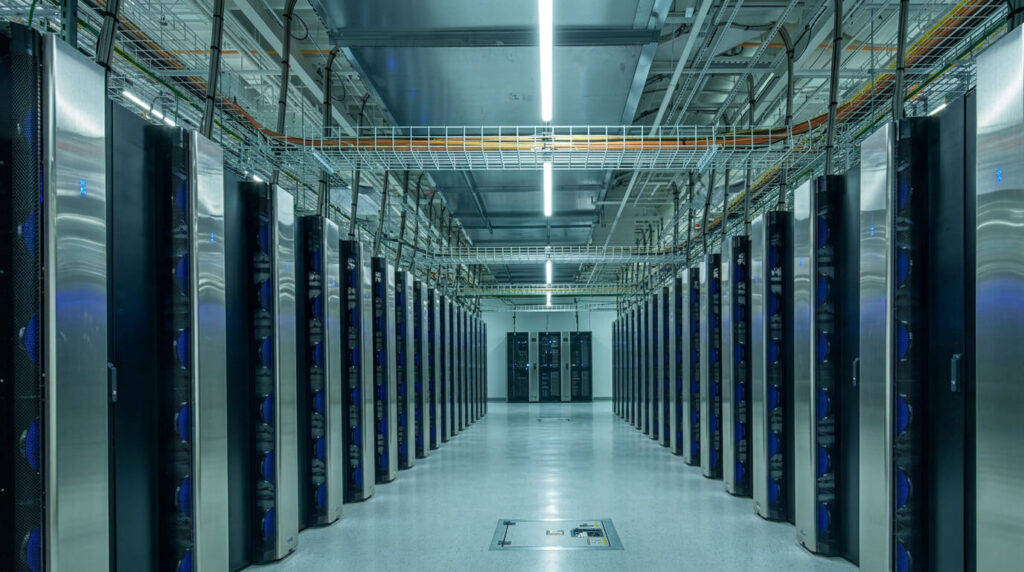
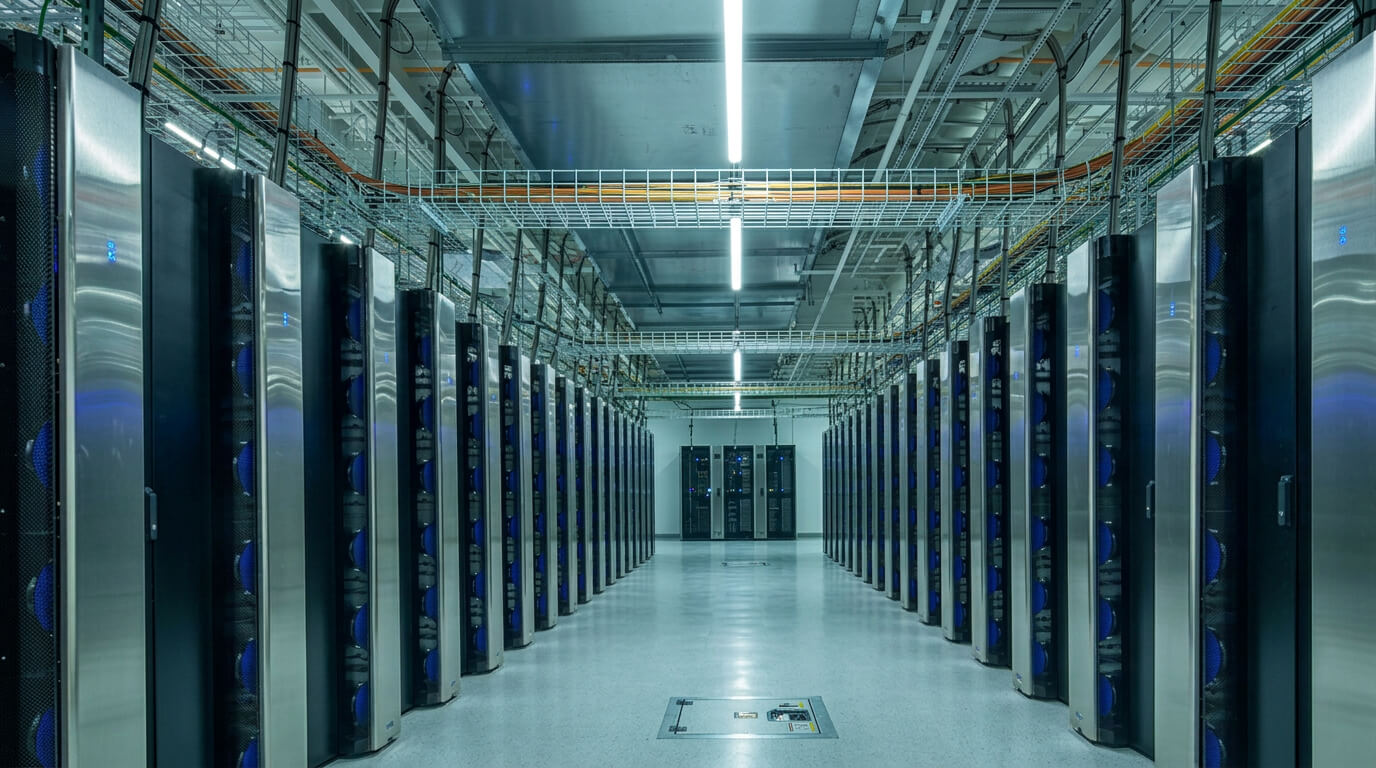
In a data center, computing lives in the racks. An important aspect to maintaining uptime is controlling the air around the racks. When a rack goes down, the impact can extend far beyond a single server, taking critical computing capacity offline. A critical component in airflow control is damper performance.
A rack that pulls as much power as a small neighborhood doesn’t usually suffer downtime because of a miscalculation on paper. In terms of airflow control, racks suffer downtime when heat reaches wrong aisle, equipment had to be taken offline for maintenance, or a costly and often overlooked issue occurs: a leaking damper disrupts airflow and wastes energy for years. The physical systems controlling that air are easy to overlook, yet they can influence everything from rack performance and uptime to the energy costs that accumulate unnoticed over time.
Not every airflow problem announces itself with an outage. Some quietly drain performance and efficiency for years. For a system so critical to uptime, airflow control is often trusted more than it’s verified. In the intelligence age, that’s becoming an expensive assumption.
That’s why we’re building the intelligence age on airflow control that can be trusted, verified, and relied on long after commissioning.
We’re early. Don’t regulate the factory before it exists.
A lot of money is moving. That doesn’t mean the industry is mature. This looks more like the 1995 internet backbone, or early electrification: the idea is ahead of the plant. What’s actually scarce is the infrastructure: interconnects, fans, evaporative media, transformers, turbines, copper, skilled tradespeople, and cooling capacity, not another demo.
David Sacks has this about right. Let the builders cook. We can’t walk in a race while the rest of the world is running full speed ahead. Don’t stand up an FDA for models so the labs that already shipped can freeze the field and call it safety. Product liability already exists. If a system hurts people, the company owns it. What we don’t need is a permission slip to ship software, or fifty different state rulebooks only the giants can staff.
Recently, many of the industry’s leading builders gathered in one room. The conversation wasn’t just about models, chips, or regulation. It was about infrastructure. Every breakthrough in AI ultimately depends on power, cooling, networking, and the facilities that bring all of it together. The technology gets the attention, but the physical systems make it possible.
Maybe we need a better name. “Data center” sounds like a warehouse. In reality, these facilities operate more like factories: power in, capability out.
The term “data center” understates what these facilities have become. They are no longer passive buildings that store and process information. They are industrial facilities converting electricity into computation at unprecedented scale. Thinking of them as factories changes the conversation. Factory performance depends on reliable inputs, efficient processes, and infrastructure that can operate continuously.
The half of that argument that actually hits our business is energy and speed-to-power. You don’t win AI with a debate about chatbots. You win it by building generation, wires, cooling systems, and halls fast enough to support demand. Stop building and the demand doesn’t disappear. The investment, jobs, and infrastructure simply get built somewhere else.
Chips will turn over. Software will get cheaper. The buildings stick around. Spec them like machines, not tents.
Data centers do more good than bad… if they pay their own way
The easy take is that data centers are the bad guys because they use power and water. Waste and cost-shifting are the bad guys. A leaky evaporative hall that jumps the line on a tight grid is a problem. The same campus, contracted the right way, is a tax base and a reason new plants actually get built.
In plain English: the hyperscalers should act like power companies. Bring your own generation. Don’t raise the household bill. New load pays for new supply. That’s the grown-up version of a moratorium. Ban the hall and you don’t protect anyone. Make the tenant fund the turbines, the wires, and the batteries, and everybody else can ride along.
Water is a design choice, not a law of AI
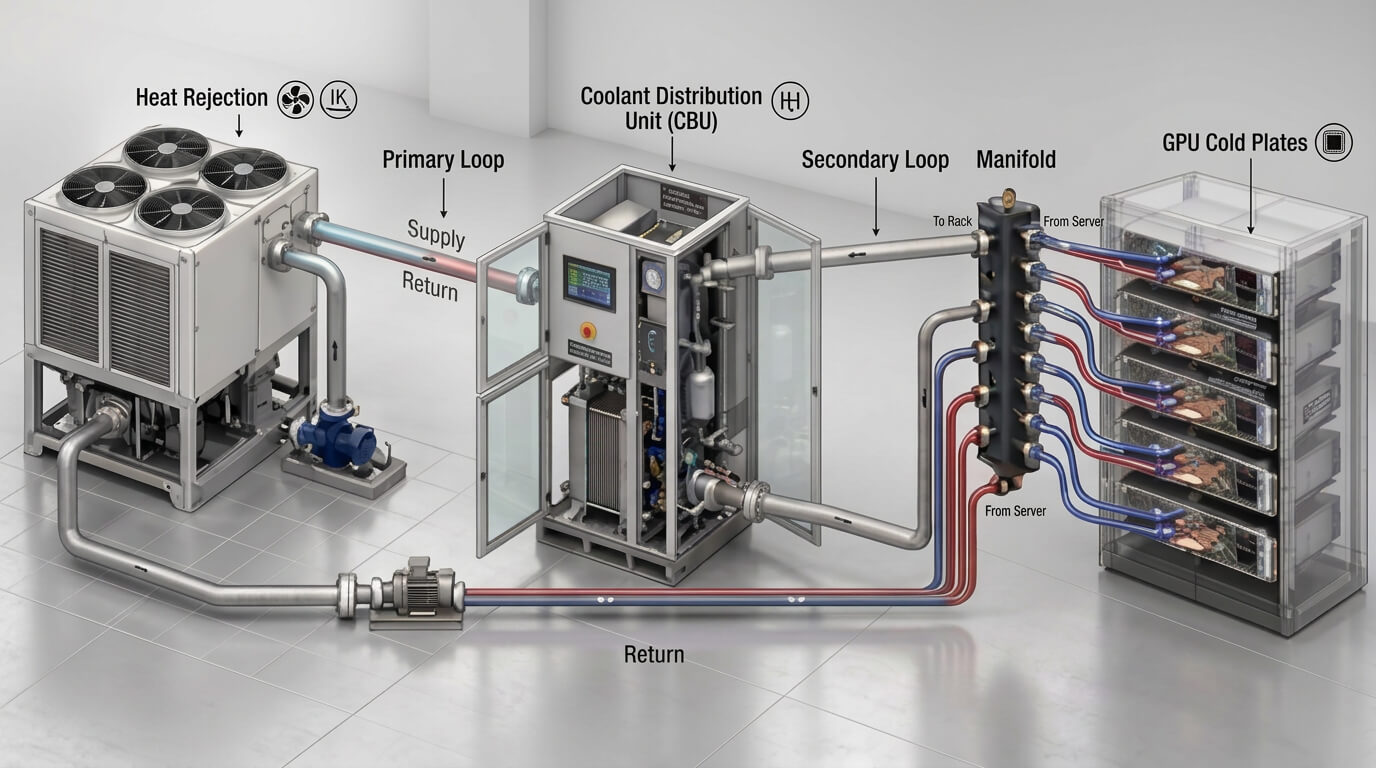
Closed-loop liquid cooling runs a sealed water/glycol mix. After the first fill, the ongoing water use can drop toward household scale. In the right climate, dry coolers push on-site cooling water close to zero. Meta has been clear that its AI halls run closed-loop, not open evaporative plants. Newer chips run coolant hot enough, around 45°C, that heat can be rejected to air instead of a tower.
Liquid doesn’t retire the air side. Economizers, makeup air, isolation, smoke control, and containment still have to work.
Louisiana is the live case
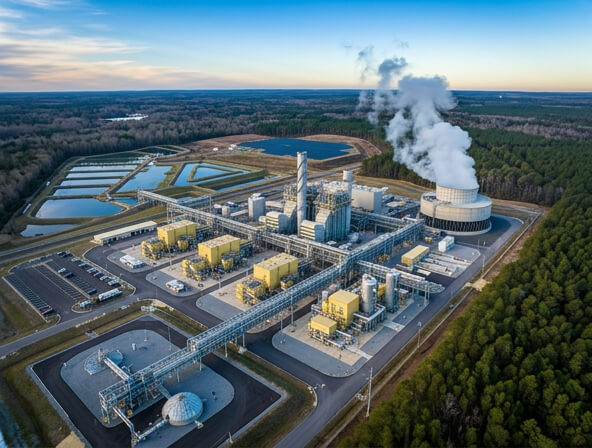
Meta’s Hyperion campus in Richland Parish is now one of the largest AI sites on the map. What’s worth watching is the Entergy deal: dedicated combined-cycle plants, batteries, hundreds of miles of transmission, solar commitments, and a cost-of-service structure meant to keep the build off existing ratepayers. The companies put customer benefits in the $2–2.65 billion range over the life of the agreements, plus money into bill assistance and efficiency.
There’s another half to this as well. There were tax exemptions, a secretive original process, and critics who think households still hold residual risk if a 15- or 20-year tenant walks away from 30-year plants. “More good than bad” is a contract. It isn’t a ribbon-cutting.
What lands in people’s pockets is the school check. Richland Parish already had a “13th check” for teachers, paid out of local sales tax. Last year a full-share certified teacher got about $10,200. This year that check was about $50,900. Support staff went from roughly $3,300 to about $17,500. For a lot of those teachers, the bonus is in the same neighborhood as a full year’s pay. Superintendent Sheldon Jones said it out loud: last year $10,000, this year over $50,000, and for the first time in his 30-year career every teacher they interviewed was fully certified. For a rural perish, the ability to suddenly recruit fully certified teachers changed everything.
Then look at the checkbook
Loudoun County, Virginia, known as Data Center Alley, throws off about a billion dollars a year in local tax. That money funds a huge share of county operations. Take away the money and holding services constant means a brutal jump in the typical homeowner bill. With it, residential property tax has been held down for a decade.
Los Lunas, New Mexico, and school-payment deals in Ohio are smaller versions of the same story. Incentives can be sloppy. That doesn’t erase the places where windowless buildings pay for schools and keep the millage off houses.
The test isn’t “does a data center use electricity?” It’s whether the load brings power or pays full freight, whether cooling evaporates a river or runs closed-loop, and whether the tax base shows up for the people who already live there.
The supply chain nobody puts in the slide deck
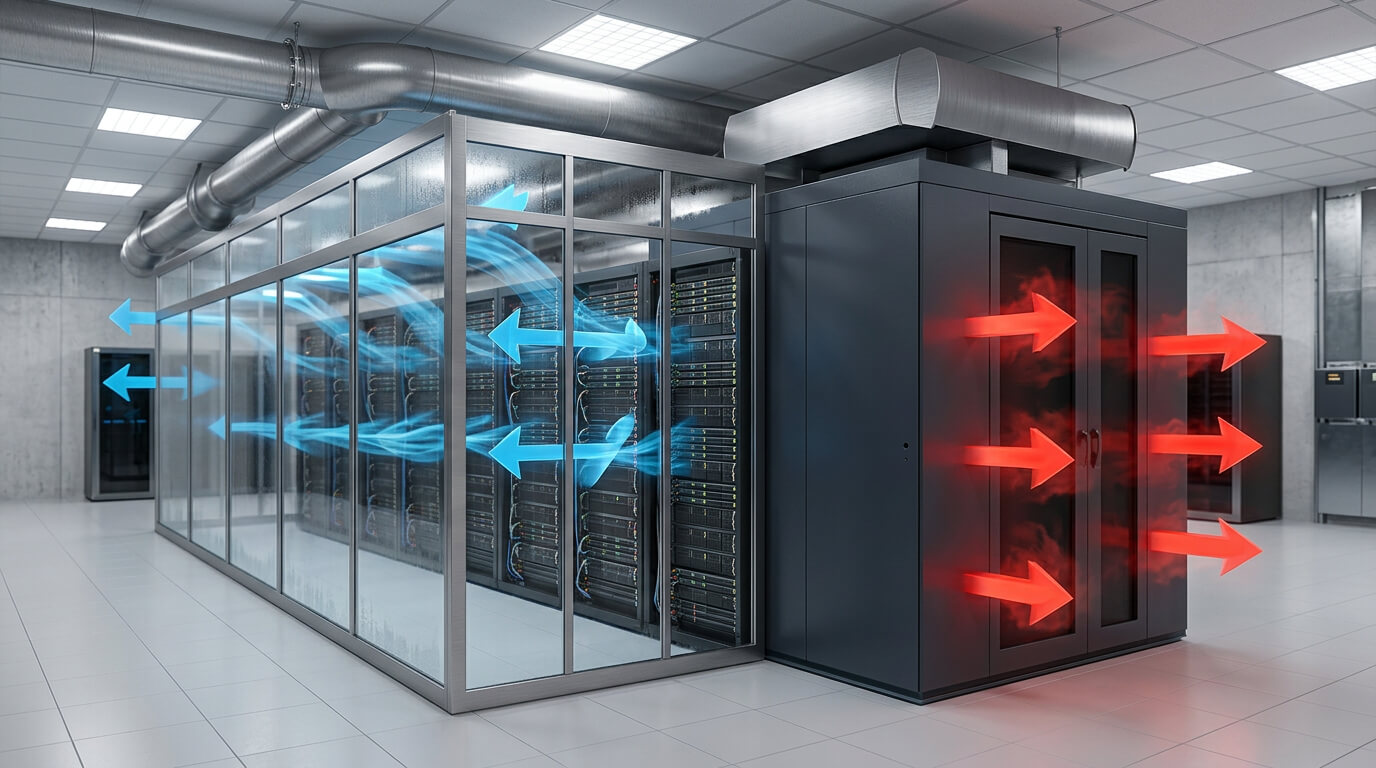
Everyone maps chips to servers to substations. The missing layer is air, treated like inventory.
Cooling is splitting in two. Liquid goes to the chip. Air still does everything else: economizer hours, isolation, smoke control, containment, relief, makeup air, and free cooling. Hybrid halls are going to be the default for years. Leakage wastes cooling and wrecks PUE. Maintenance is a supply-chain risk in a hall that never shuts down. Thermal bridging and condensation are how “precision cooling” quietly wrecks expensive gear. Fire and smoke isolation is the unfashionable half of uptime.
Dampers are long-cycle equipment inside a short-cycle industry. Spec them like a commodity and you buy a fifteen-year tax. Letting builders cook is not the same as being sloppy. It means you don’t wait for a new agency, and you don’t cheap out on the layer that has to last.
Where Tamco sits
While the model drives the demand, our job is making sure the air doesn’t become the constraint.
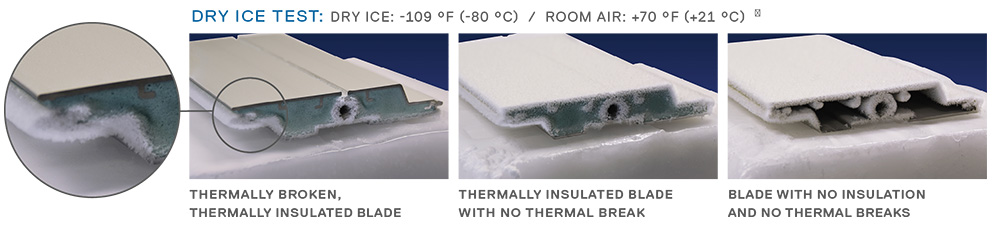
Tamco made its name on maintenance-free aluminum dampers for rooms that can’t afford a service visit. Dual-bearing, self-lubricating linkage with no grease points and no need to enter a live plenum for routine maintenance. Mechanically fastened seals and ultra-low leakage that still holds after hard cycle testing of over 2 million cycles. Thermally broken and insulated construction, so the damper is a barrier to temperature as well as air. Aluminum, with moisture or salt options for the coastal and humid sites where a lot of new capacity wants to land. Made in the United States and Canada, which matters when too many critical parts sit on a 36-month lead time from somewhere fragile.

Densities keep going up. Air and liquid will live next to each other, which makes the air side more important, not less.
Data centers aren’t a side market for us. They’re the core. The jobs that actually matter in an AI hall are pretty narrow: containment and isolation, outdoor air and economizer control, thermal performance at the envelope, backdraft and relief that still seals. A cheap damper in a multi-billion-dollar campus looks like nothing on the bid. It isn’t nothing ten years later. Factory tests don’t care about your brand story. They care whether the air went where the drawing said it would.
The next ten years will be defined by tighter controls, higher resilience requirements, and the growing value of getting the specification right the first time.
Washington’s useful job in that decade is pretty small: one federal standard instead of a state-by-state mess, faster permits for generation and interconnects, and a hard line that new compute doesn’t sneak onto the residential bill. The rest is on the operators and the vendors inside the wall.
The AI factory of the early 2030s will still fail more often from air and power than from a bad model. That’s what “early” looks like. Don’t pause it. Don’t lock it up. Build it so the household isn’t the financier, and so the air behaves for twenty years without asking the facility for attention.
Intelligence is about to get cheap. Moving air on purpose won’t. Data centers aren’t a moral stain. They’re industrial plants. Let them cook, and spec the layer that keeps them alive.
The future is trained on GPUs but it is kept alive by airflow.

Marco Groleau
Marco Groleau is Tamco’s Director of Business Development and leads the commercial team, setting direction for growth, customer strategy, and market expansion across commercial HVAC and mission-critical air movement. He has deep experience in the data center vertical, working with owners, engineers, and contractors on airflow control for high-density facilities, where leakage, thermal performance, and long-term reliability directly affect uptime and energy use.
As a commercial leader, Marco aligns regional teams and business initiatives around what end users actually need, with a focus on operational flexibility, continuous improvement, and durable customer relationships. That leadership has helped position Tamco as a source of high-performance, sustainable, technically advanced damper solutions for both conventional commercial projects and data center environments.